
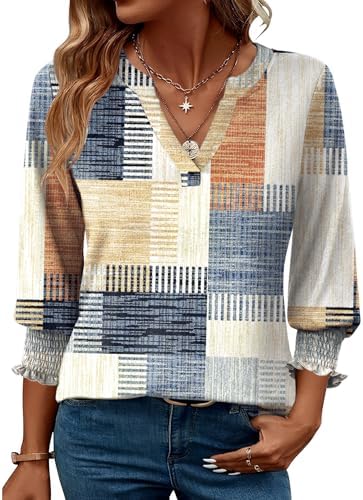
 Blouses for Women Dressy Casual 3/4 Sleeve Tops for Women V Neck T ShirtA woven V-neck blouse in an orange and blue print, finished with three-quarter smocked sleeves and soft ruffled cuffs. 4.3 out of 5 · 8,691 ratings$7.19
Care notes
Caring for garments at the wash tub
Heat breaks down the stretch in woven thread and knit loops long before cloth tears. A cold wash and line drying keep the seams straight, the waistbands firm, and the cuff ribbing tight across our catalogue of 254 pieces arranged across seven sections.
Sorting the basket by cloth weight
Sort loads by the weight of the weave instead of the shade on the rack. A light placket on a summer shirt takes damage when it churns beside a heavy knit sweater in the same drum. Coarse seams rub against thin sleeves and abrade the plain weave during the spin. Group the trousers with the jackets, and set the light tops aside for their own cold wash. Check every pocket for forgotten items before loading. Fasten the buttons along the front placket so the cloth holds its square line through the entire cycle.
Fastening hardware before the wash starts
Close every zipper to the top pull before dropping a jacket or trouser into the basin. Exposed metal or plastic teeth drag across face cloth and snag adjacent knit loops as the drum turns. Turn printed garments inside out so the printed face does not scrub flat against the metal tub walls. Put any top with long neck ties, shoulder drawstrings, or thin tunnel cords inside a mesh bag. That netting keeps the cords from winding tightly around the agitator, stretching thin hems, or pulling loose from their reinforced exit holes.
Drying flat and drying on hangers
Lay wet knitwear out flat on a towel instead of hanging it from a shoulder seam. Water adds weight to the knit loops, and gravity pulls the body out of square while the hem stretches toward the floor. Outer shells and rain capes hang from wide plastic hangers to drip dry over a drain. Do not wring a water-resistant coat with your hands, because twisting wrinkles the laminate backing and cracks the internal taped seams. Keep wet garments off hot metal radiators, which scorch the surface fibers and dry the cloth unevenly.
Treating coated fabrics with care
Bleach strips the dye from the fiber core and weakens the fine synthetic filament in our lightweight trail garments. Skip the hot tumble dryer entirely. Heat leaves the stretch a little slacker each month until a cuff stops holding and a waistband stops pulling back. Avoid running a hot iron across the face of any coated windbreaker or rain jacket. Direct soleplate heat melts the water-repellent coating and leaves a permanent shiny mark across the chest. Hang the jacket in a warm room to let the wrinkles relax out naturally.
Recognizing when a garment is spent
Garments show when they reach the end of their useful working life. The cloth does not need a split seam or a torn hem to be finished. The clear test is recovery. Pull a ribbed sleeve cuff wide between your hands and let it go. If the cuff snaps back firmly against the wrist, the knit is sound. If the opening hangs wide and the cuff remains loose and ruffled, the fine elastic threads inside the yarn have relaxed completely. When a waistband stretches out and no longer snaps back, retire the piece.
- Sort garments into the wash basket by cloth weight to keep heavy seams from abrading thin weaves.
- Fasten all zippers to the top so the teeth do not catch and pull adjacent knit loops.
- Turn every printed top inside out before washing to keep the print surface off the drum walls.
- Place long ties and waist drawcords inside a mesh wash bag to stop them from tangling.
- Lay heavy knit garments flat on a dry towel so the weight of the water does not stretch hems.
From this section
Pieces the note is about
Blouses for Women Dressy Casual 3/4 Sleeve Tops for Women V Neck T ShirtA woven V-neck blouse in an orange and blue print, finished with three-quarter smocked sleeves and soft ruffled cuffs. 4.3 out of 5 · 8,691 ratings$7.19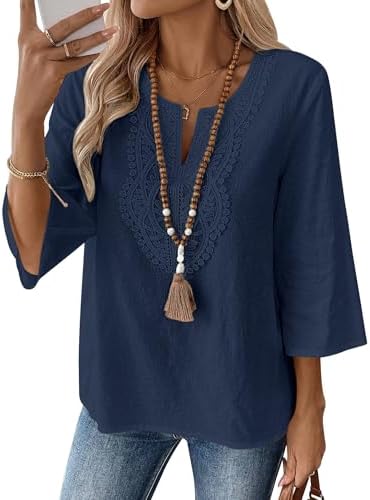 Women's 3/4 Sleeve Cotton Linen Shirts Casual V Neck Shirts Navy BlueCut from a lightweight cotton-linen blend with a deep blue dye, a lace-trimmed V-neckline, and easy three-quarter sleeves. 4.1 out of 5 · 3,028 ratings$16.99
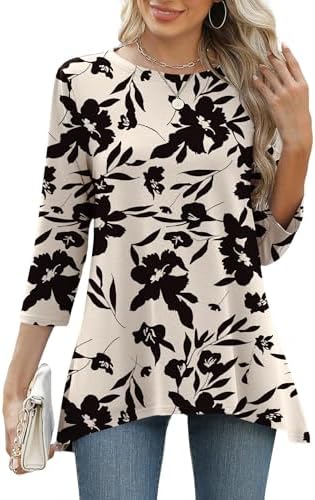 Women's Tops 3/4 Sleeve Dressy Casual Plus Size Tunic Tops to Wear withCut long with a flared swing hem, this three-quarter sleeve tunic is knit from a lightweight stretch jersey in soft apricot. 4.4 out of 5 · 2,930 ratings$12.99
 Ladies Tops and Blouses Loose Fit Petal Sleeve Tunic Plus Size MaternityA loose knit tunic top cut with overlapping petal sleeves, an open split neckline, and a rounded hem in a splashed ink print. 4.4 out of 5 · 2,431 ratings$9.99
All of Tops & Blouses is on one page.
Keeping the seams in order
Washing cold and skipping the hot dryer preserves the cut of every collar, pocket, and hem. Cloth lasts when it stays away from harsh heat and rough friction in the drum. Check the cuffs, hang the shells to dry, and the garments will hold their true line.
See Tops & BlousesKeep reading
Other postcards
What keeps the rain out of clothWe cut 21 pieces for the rain and wind section across our wider collection of 254 pieces. A shell sheds water because the face cloth carries a coating, while an untreated weave lets water soak through the yarns. How the seams, cuffs, and plackets are set decides what gets past the cloth.Why a long sleeve works on bright trailsWe cut 18 pieces for bright trails and open ground. A long sleeve covers the arms without trapping heat when the cut stays loose. Air moves through an open weave while the cloth casts its own shade. These notes explain how our collars, zips, cuffs, and drop hems are put together.Where a neckline lands on the frameA cut begins at the neck and shoulders before cloth drops toward the waist. Across our tops and blouses rail, eighty-three pieces take their balance from where that opening rests against the collarbone and how the sleeve joins the body. Changing the seam placement alters the line of the entire garment.