
 Pink Sweatshirt Womens Crewneck MAMA Loose Fit Long Sleeve PulloverA fleece-backed crewneck sweatshirt cut with dropped shoulders, ribbed trim, and a printed graphic across the chest. 4.6 out of 5 · 922 ratings$23.74
Knit notes
How to read a knit garment
We cut our knitwear section for cold mornings, windy walks, and quiet rooms. A knit behaves differently from a woven shirt on the table and on the body. Reading the cuff, the shoulder seam, the facing, and the loops tells you how a piece hangs and how it traps warmth.
Loops and recovery in the cloth
A woven cloth crosses straight threads over and under each other. A knit cloth links rows of open loops together. Because each loop can change shape under tension, the cloth expands when you move your arms and recovers when you drop them. Woven cloth yields only along the bias grain. A knit stretches in both directions without needing extra ease cut into the side seam. The loop gauge determines how firmly the cloth snaps back. A fine gauge lies close against the shoulder, while a heavy gauge creates thicker walls between the rows. That structure changes how the cloth carries its own weight over a full season.
Checking the cuff rib and hem
Look at where the body meets the edges. We cut 51 sweaters, cardigans, cropped shrugs, sweatshirts and hoodies, and the ribbing at the hem sets the profile. A hem rib cut narrower than the body gathers the fabric above the waist, creating a bloused line. A hem rib that runs straight from the side seam drops cleanly past the hip without pulling in. Look at the depth of the cuff rib as well. A short cuff rib ends at the wrist bone and lets the sleeve fall wide. A deep cuff rib hugs the lower forearm, holding the sleeve in place when you push it up.
Cardigan fronts and shoulder placement
A cardigan front needs structure to hold buttons or to lie flat open. Some pieces use a folded edge of the same knit cloth. Others have a separate knitted placket or facing stitched along the vertical edge. A stitched facing gives the neckline weight so the front bands do not curl outward during wear. Check the shoulder seam next. A set-in sleeve places the seam right at the shoulder bone for a neat fit under a heavier coat. A dropped shoulder sets the seam well down the upper arm, widening the chest panel and leaving room for a base layer underneath.
Air loft and brushed interiors
Warmth comes down to trapped air held inside the cloth. A flat, dense knit lets heat move through quickly because the yarns sit packed together. A lofted knit uses yarn with high bulk, creating pockets between the loops where air stays still. That is why two pieces of the exact same weight can feel completely different in cold air. A brushed interior increases that loft further. Mechanical brushing pulls loose fibers out of the inner loop backs to form a soft pile. That brushed surface holds more dead air against the body than a flat knit face can manage on its own.
Folding storage and cropped layers
Never store knitwear on a hanger between seasons. Gravity pulls the loops downward, stretching the shoulder line and leaving peaked dimples where the hanger ends hit the cloth. Fold each piece flat on a shelf instead. That keeps the ribbing snug and preserves the original length of the sleeve. For mild days, a cropped shrug covers the arm and shoulders without adding cloth over the torso. It ends high above the waist, giving you arm coverage while keeping the chest open. Our catalogue holds 254 pieces across 7 sections, built around practical cuts and dependable seams.
- We cut 51 sweaters, cardigans, cropped shrugs, sweatshirts and hoodies across our knitwear range.
- A knit cloth uses interlocking loops that stretch and recover during ordinary arm movement.
- A brushed interior holds more trapped air than a flat unbrushed knit of equal weight.
- Hanging a sweater pulls the loops downward and permanently stretches the shoulder seam.
- Our catalogue holds 254 pieces across 7 sections sorted by weather, sleeve, and use.
From this section
Pieces the note is about
Pink Sweatshirt Womens Crewneck MAMA Loose Fit Long Sleeve PulloverA fleece-backed crewneck sweatshirt cut with dropped shoulders, ribbed trim, and a printed graphic across the chest. 4.6 out of 5 · 922 ratings$23.74 Pullover Sweaters for Women Mock Turtleneck Long Sleeve Lightweight TopA lightweight fine knit pullover cut with a stand mock turtleneck, straight set-in long sleeves, and a soft yellow finish. 4.2 out of 5 · 821 ratings$23.99
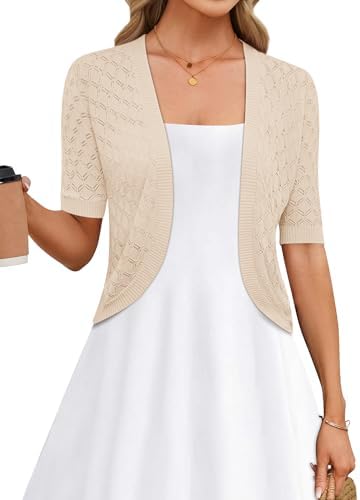 Womens Cropped Cardigan Short Sleeve Shrug for Dresses Summer LightweightA lightweight cropped shrug in soft apricot knit, cut with an open front and short sleeves for easy layering over sundresses. 4.3 out of 5 · 755 ratings$14.99
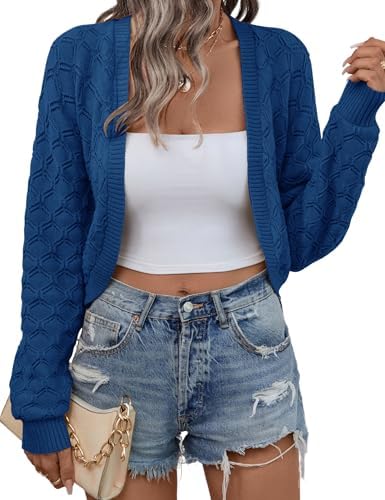 Womens Bolero Shrugs for Dresses Cropped Sweater Long Sleeve Open FrontA cropped open front bolero knit with an openwork eyelet stitch and long set-in sleeves in Deep Blue. 4.3 out of 5 · 466 ratings$19.99
All of Knitwear & Layers is on one page.
Caring for your knitwear seams
Wash knit pieces in cold water and dry them flat on a towel. Cold water keeps the loop tension steady, while flat drying stops the wet weight from pulling the hem out of square. Keep them folded in a drawer or on a shelf so the shoulders stay clean and level.
See Knitwear & LayersKeep reading
Other postcards
What keeps the rain out of clothWe cut 21 pieces for the rain and wind section across our wider collection of 254 pieces. A shell sheds water because the face cloth carries a coating, while an untreated weave lets water soak through the yarns. How the seams, cuffs, and plackets are set decides what gets past the cloth.Why a long sleeve works on bright trailsWe cut 18 pieces for bright trails and open ground. A long sleeve covers the arms without trapping heat when the cut stays loose. Air moves through an open weave while the cloth casts its own shade. These notes explain how our collars, zips, cuffs, and drop hems are put together.Where a neckline lands on the frameA cut begins at the neck and shoulders before cloth drops toward the waist. Across our tops and blouses rail, eighty-three pieces take their balance from where that opening rests against the collarbone and how the sleeve joins the body. Changing the seam placement alters the line of the entire garment.